



Gum recession: when does a gum graft have a place?
Receding gums do not always call for a graft. Everything hinges on the cause, the bone that remains between the teeth, the thickness of the gum and what troubles you. This page sets out the signs, the examination, the criteria for deciding, the gum graft techniques Dr Victor Hazout uses at his Levallois-Perret practice, and what the studies allow you to expect.
Receding gums and gum recession: what does it mean?
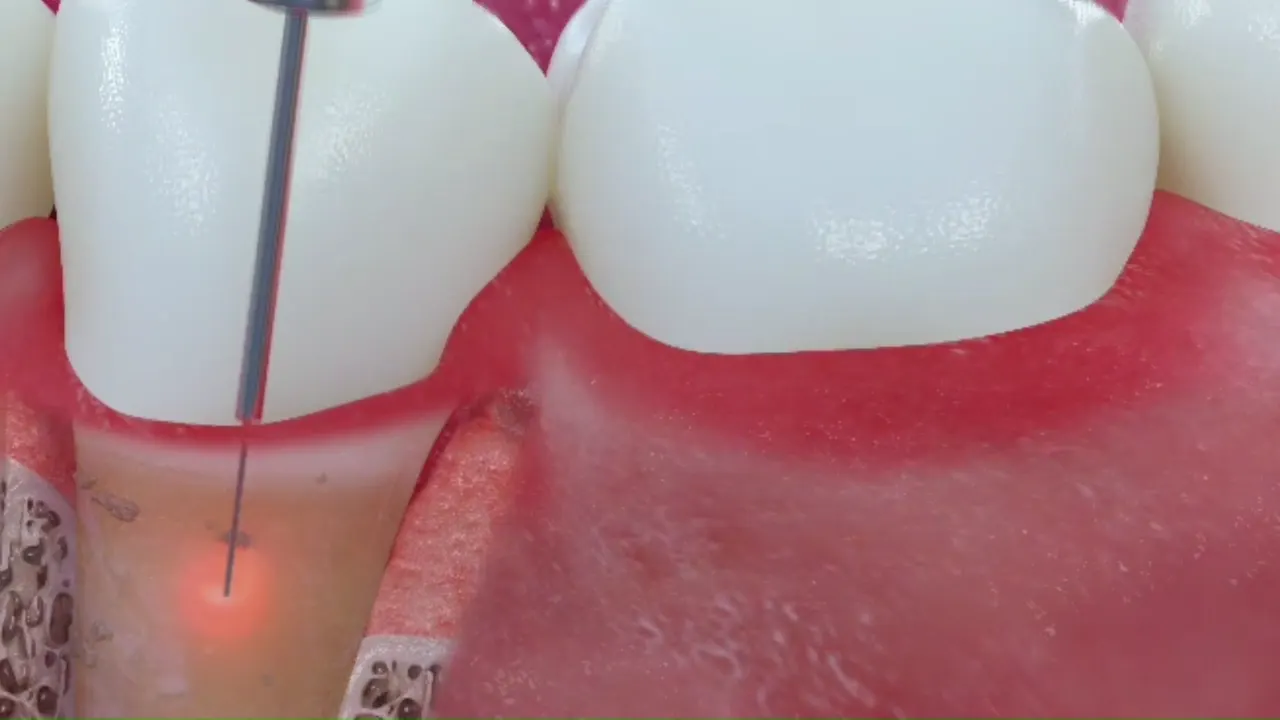
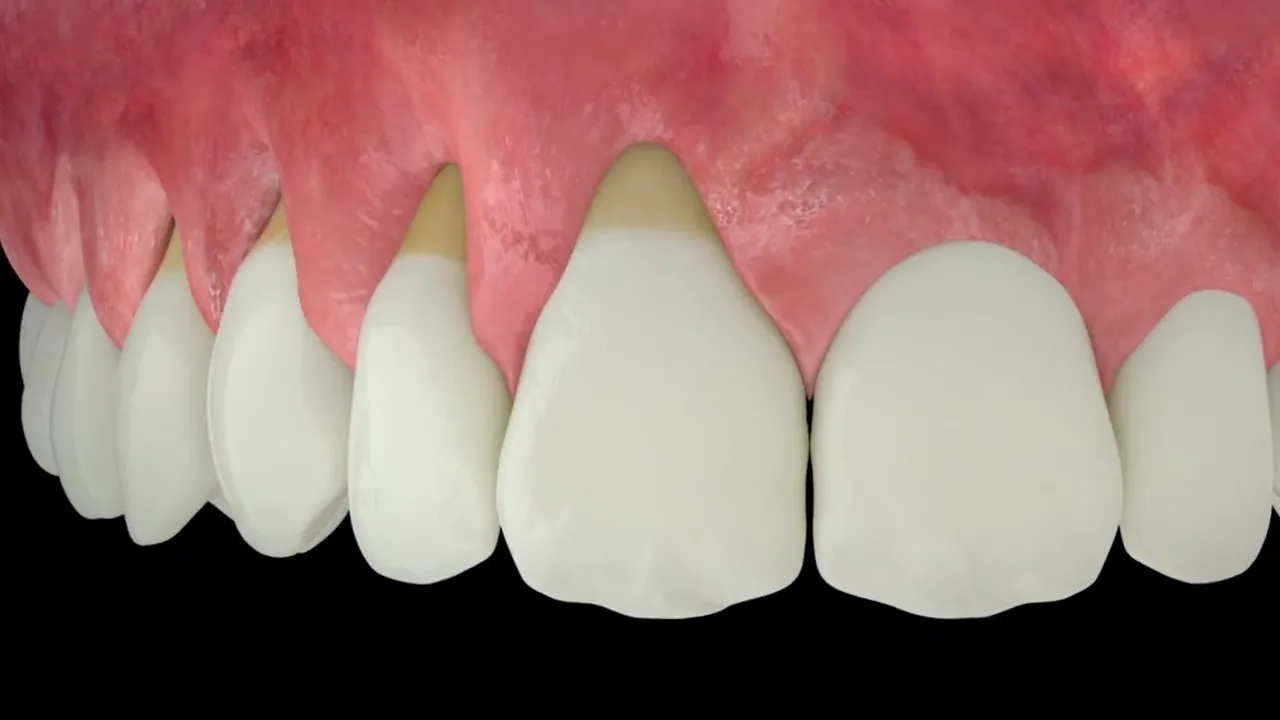
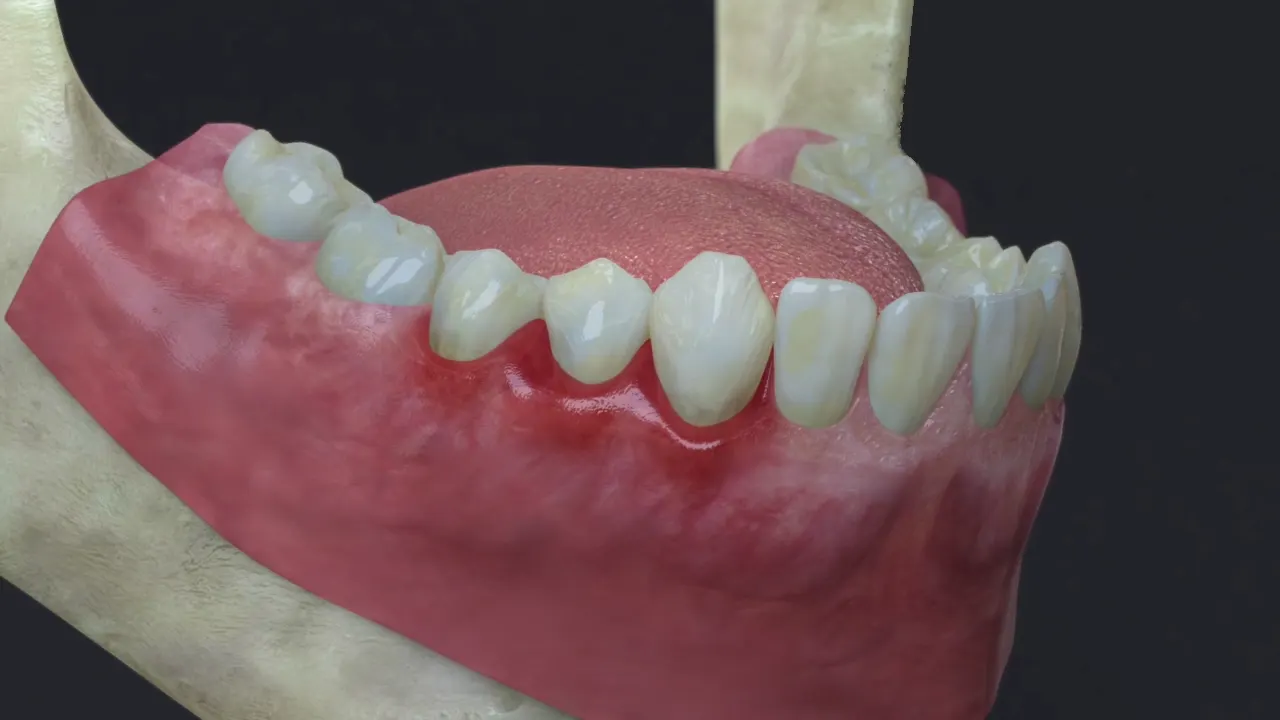
"My gums are receding", "my tooth is losing its gum": the tooth seems to lengthen and its root comes into view. The medical term is gingival recession: the gum margin slips below the junction between enamel and root, leaving part of the root bare. That root is clad in a tissue softer than enamel; once exposed, it reacts to cold, wears down and decays more readily.
Behind the words "receding gums" lie two realities. In the first, the gum retreats on a tooth whose support between the teeth is intact: an isolated recession, often linked to brushing or thin gum tissue. In the second, the gum follows bone destroyed by periodontitis: several teeth are affected, with pockets, bleeding and sometimes looseness. The two are not treated the same way, and that is the first question the examination has to settle (see recognising periodontitis).
What are the signs of a recession?
Recession creeps in quietly and is seldom noticed at first. Four signs, more than any others, bring people to the practice.
- sensitivity to cold, air or sugar, located at the neck of one or more teeth: the bare root no longer has enamel to shield it;
- a tooth that looks longer than the others, or a gum line that no longer sits level with the neighbouring teeth;
- a visible root, a deeper yellow than the enamel, sometimes hollowed by a notch at the neck or marked by decay;
- discomfort when smiling or brushing: the brush stirs a twinge as it passes, or the gum seems to be missing in front of a tooth.
Bleeding, redness or swelling alongside these signs point instead to inflammation, gingivitis or periodontitis, to be treated before any talk of grafting. Conversely, an isolated recession on healthy gum neither bleeds nor hurts, apart from that sensitivity to cold.
Why do gums recede?
Several factors go with the onset or worsening of a recession, and they usually add up. The ground first: thin, shallow gum tissue (a thin gingival phenotype, in the accepted term) and very thin, sometimes absent, bone over the root. On such fragile ground, a modest insult is enough to send the gum into retreat.
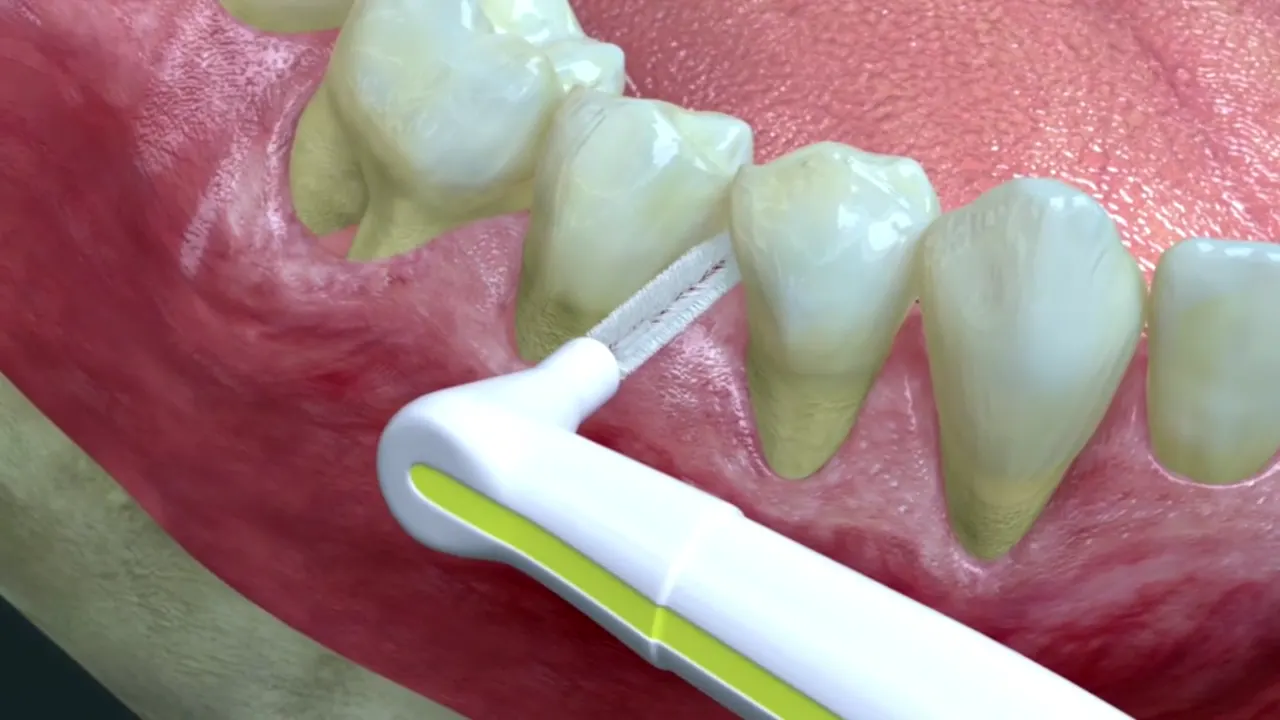
The most common insults: forceful or horizontal brushing with a hard brush, orthodontic movement that carries the tooth out of its bony envelope, a lip or cheek frenum that tugs at the gum with every movement, a lip or tongue piercing, and an overhanging restoration or a crown whose edge irritates the tissue. Periodontitis, lastly, destroys bone and attachment; the gum follows, and recession spreads to the visible surfaces and the spaces between the teeth alike.
Smoking and poorly controlled plaque do not create a recession by themselves, but they undermine the healing of a graft and weigh in the decision.
What the periodontist examines before deciding
The examination looks for the cause first, then gauges what can be achieved. Dr Hazout measures the height of the recession, the thickness of the gum and the height of keratinised gum (the firm, attached gum, as opposed to the mobile lining mucosa beyond it). He studies the exposed root (wear, notch, decay), the position of the frenum and the way you brush, and notes whether the area shows when you smile. X-rays define the bone present between the teeth, because that is what governs the outcome [1].
The 2018 international classification adopted the Cairo classification, based on the attachment, in other words the support between the teeth, on either side of the recession [1]:
| Type | What it means | Chance of covering the root |
|---|---|---|
| RT1 | No loss of support between the teeth | Complete coverage possible |
| RT2 | Loss of support between the teeth, less than or equal to that on the visible surface | Coverage often partial |
| RT3 | Loss of support between the teeth greater than on the visible surface | Complete coverage generally not possible |
It gives a prognosis before any technique is chosen: in RT1, full root coverage can be hoped for; in RT2, coverage is often partial; in RT3, the height lost between the teeth is not rebuilt, and the aim shifts to thickening the gum and stabilising the situation rather than covering the root [1].
Is a graft needed?
A stable recession that is discreet, painless and sits on healthy, easily cleaned gum may simply be watched. The cause is tackled first: brushing technique, a soft toothbrush, control of periodontitis through periodontal treatment. A baseline measurement, repeated at every check-up, tells whether the recession is advancing.
A graft comes into the discussion more readily when:
- the recession gains ground from one measurement to the next;
- sensitivity to cold holds out against desensitising toothpastes;
- the bare root is hollowing out or decaying;
- the gum, too thin or absent, makes brushing painful;
- orthodontic treatment is planned over a fragile area;
- the look of your smile bothers you.
The choice also weighs what lies beyond the technique: a recession born of unstabilised periodontitis is not grafted, and a smoker's fragile gum heals less well. When a tooth is too damaged or too loose to keep, the question becomes one of replacing it, covered on the Implants page.
Gum graft techniques
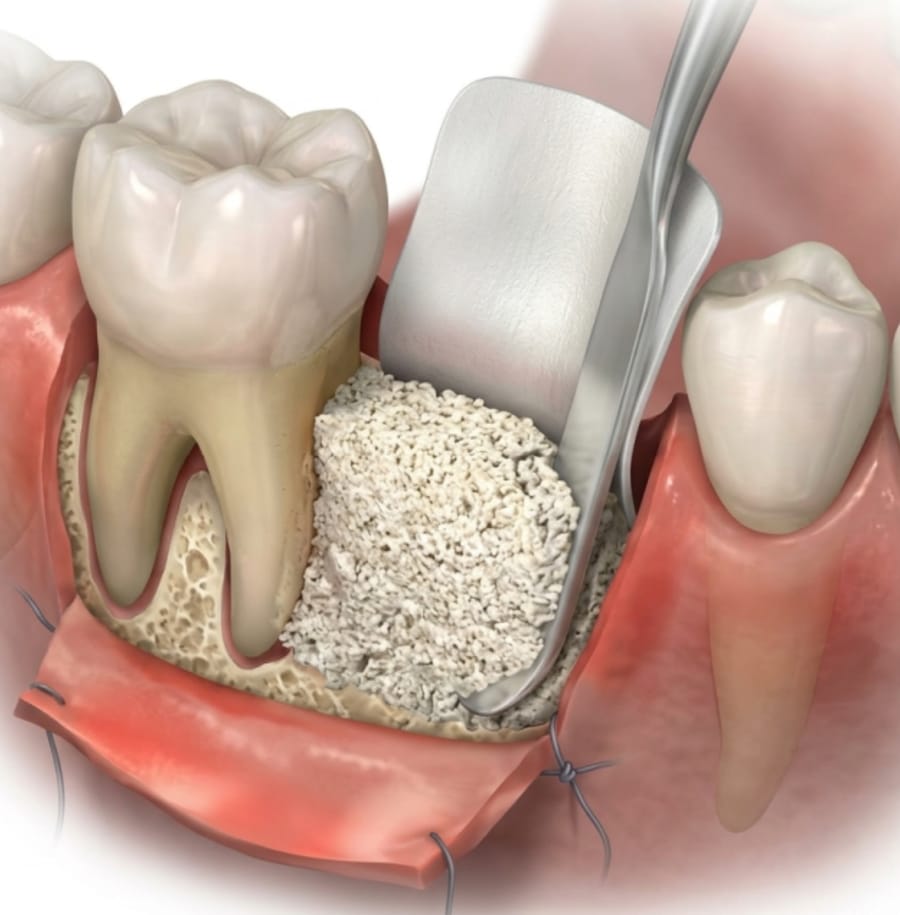
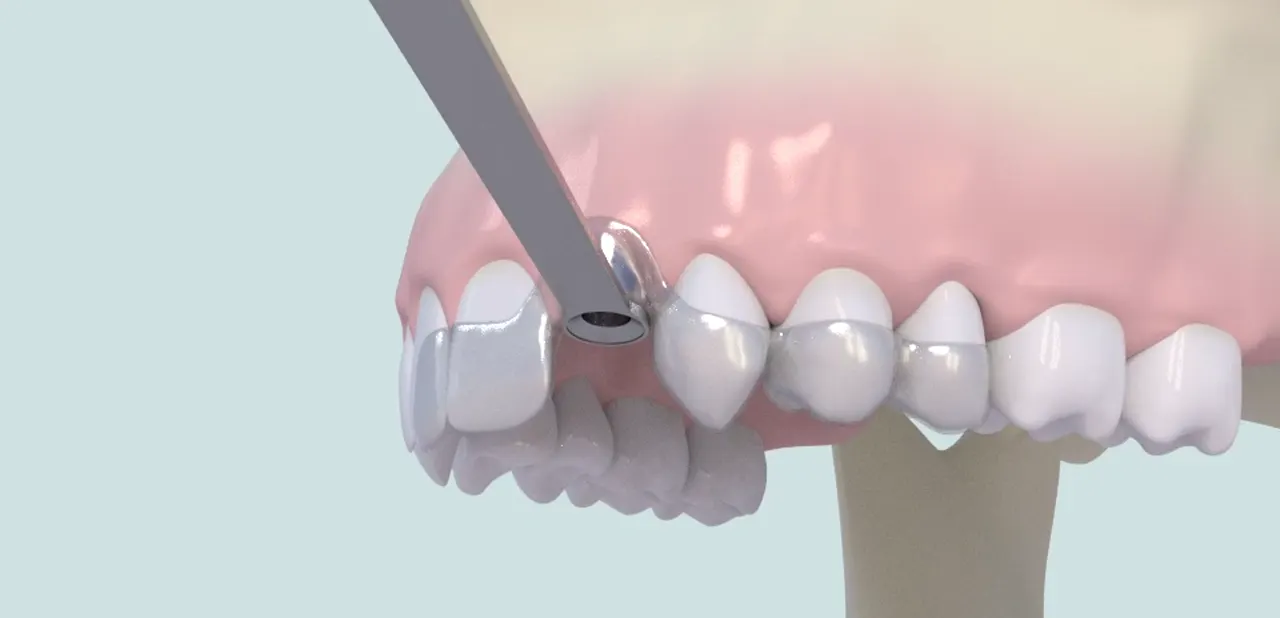
The term gum graft, or gingival graft, brings together several procedures. All pursue one of two aims, or both: recreating a band of firm gum where it is lacking, or covering an exposed root. The grafted tissue most often comes from the patient's own palate, whose thick mucosa heals over after harvesting.
Coronally advanced flap. The neighbouring gum is lifted, drawn up over the root and stitched in place. It suits shallow recessions where the gum is already thick enough.
Connective tissue graft. A thin graft of connective tissue (the deep layer of the mucosa) is taken from the palate through a short incision, then slipped beneath the gum, which covers it. It thickens the gum and makes root coverage more stable. It is the reference technique in root coverage studies [2].
Tunnel technique. Rather than cutting the papillae (the gum between the teeth), a "tunnel" is opened under the gum of several teeth and the graft is slipped into it. It is often used for multiple recessions and spares visible incisions.
Free gingival graft from the palate. A graft carrying the surface layer of the palate is laid on the area to be reinforced. Its purpose is above all to recreate a band of firm gum, far more than to cover the root. Its colour may stay distinct from the surrounding gum, which tends to reserve it for less visible areas.
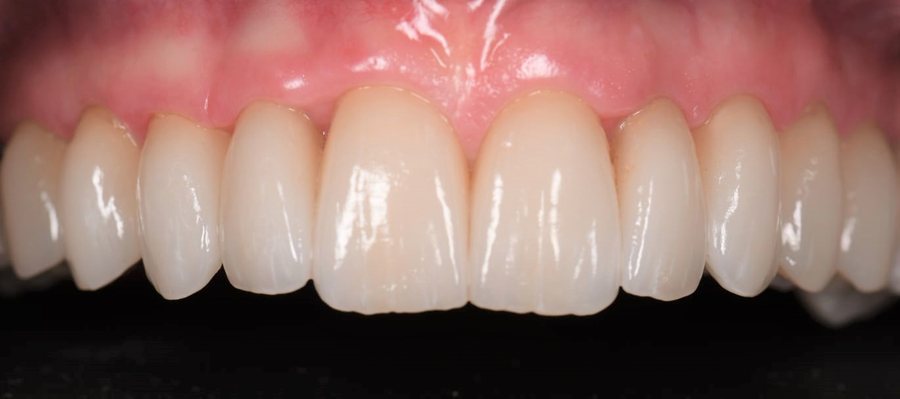
Strengthen or cover. Faced with a deep recession and no firm gum, the two aims can follow one another: strengthen first, cover later. The clinical case below illustrates that sequence.
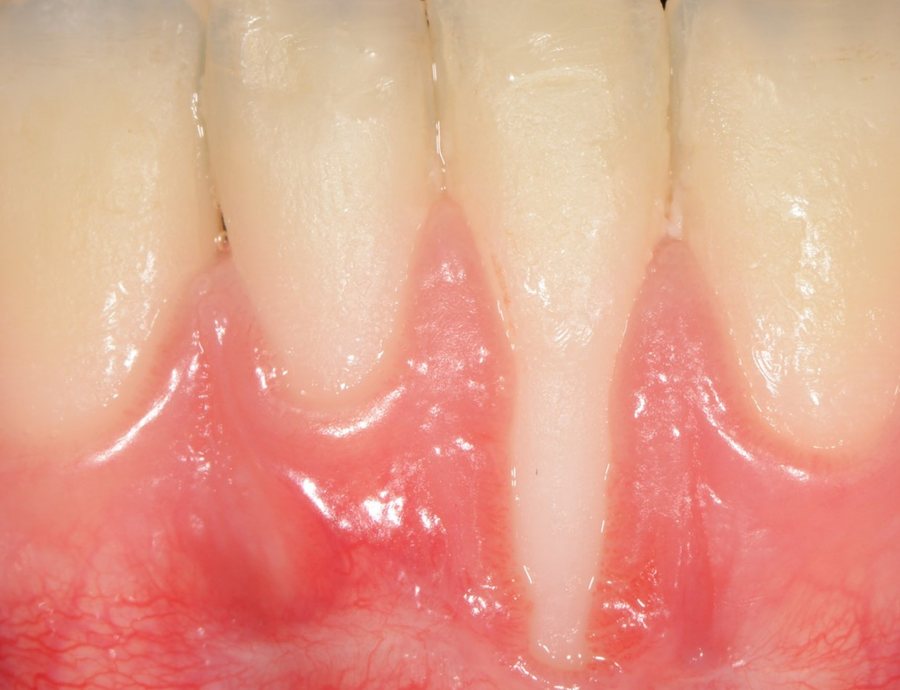
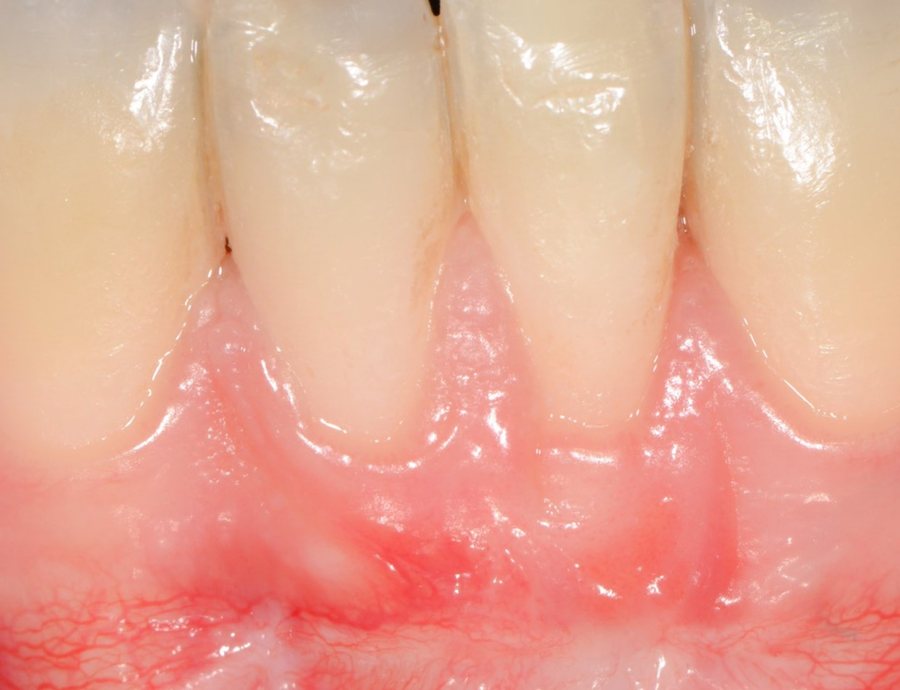
Biomaterials (enamel matrix derivative, soft-tissue substitutes) can sometimes avoid or reduce harvesting from the palate; their value is weighed case by case [2].
Grafts belong to a wider reflection on the balance between gums and teeth, developed on the Gum aesthetics page.
The practical arrangements, the course of treatment and the aftercare instructions are explained at the practice, according to your situation.
What the studies allow you to expect
The 2018 Cochrane review sifted through 48 randomised trials (1,227 participants) [2]. Several techniques cover roots: a coronally advanced flap alone or combined with a biomaterial, or a connective tissue graft. A connective tissue graft combined with a coronally advanced flap yields more keratinised gum than the alternatives compared. But the quality of the evidence ranges from low to very low, and the authors do not settle which technique is most effective.
For the tunnel technique, a 2018 meta-analysis reports mean root coverage of about 83% for single recessions and 88% for multiple recessions; with the same graft, the coronally advanced flap achieved complete coverage more often than the tunnel [3].
The limits, and why follow-up matters
A graft does not bring gum back where the bone between the teeth has gone: in RT2 and above all RT3, coverage stays partial, and no one can say in advance how much height will be regained. Nor does it correct the cause. If brushing stays traumatic, if a frenum keeps tugging or if orthodontic movement carries the tooth out of its bone, recession can return, on the grafted tooth or on a neighbour.
Follow-up therefore serves two ends: making sure the grafted gum stays stable, and keeping the cause in check. For a patient treated for periodontitis, this check belongs to periodontal maintenance visits. For others, a regular measurement of the recession and a look at the brushing technique are usually enough. Recessions that form part of a wider loss of support belong to periodontitis treatment or periodontal regeneration, not to an isolated graft.
Frequently asked questions
Can the gum grow back on its own?
No. Once the cause is corrected, the recession may settle, but the gum does not climb back over the root of its own accord.
Is a graft permanent?
Results are generally stable once the cause, traumatic brushing in particular, has been corrected. Thicker gum stands up better, but follow-up is still needed.
Can harvesting from the palate be avoided?
Sometimes, with a flap alone or a substitute. These options answer certain situations; they are discussed according to the type of recession and the thickness of the gum.
Should recession be treated before orthodontics?
Not as a rule. If the gum is very thin on a tooth that is to be moved outwards, prior reinforcement may be discussed with the orthodontist.
How much does a gum graft cost?
The amount varies with the number of teeth and the technique; a written estimate is given after the examination. The practice's fee ranges are on the Fees page.
Scientific sources (3)
- Cortellini P, Bissada NF. Mucogingival conditions in the natural dentition: Narrative review, case definitions, and diagnostic considerations. J Clin Periodontol. 2018;45 Suppl 20:S190-S198. DOI
- Chambrone L, Salinas Ortega MA, Sukekava F, Rotundo R, Kalemaj Z, Buti J, Pini Prato GP. Root coverage procedures for treating localised and multiple recession-type defects. Cochrane Database Syst Rev. 2018;10:CD007161. DOI
- Tavelli L, Barootchi S, Nguyen TVN, Tattan M, Ravidà A, Wang HL. Efficacy of tunnel technique in the treatment of localized and multiple gingival recessions: A systematic review and meta-analysis. J Periodontol. 2018;89(9):1075-1090. DOI
Page written by Dr Victor Hazout, periodontist · updated on 11 October 2026
Patient pathway